In Plaza Midwood, You Don't Lose the Sale at the Inspection. You Lose It During Due Diligence.
September 17, 2026
September 17, 2026
Most sellers prepare for the wrong moment. They brace for the day the inspector walks through with a flashlight and a clipboard, as if that visit is where a Plaza Midwood sale gets won or lost. It isn't. The inspection report is just information. What actually determines whether your sale survives is what happens in the days immediately after, when North Carolina's due diligence period hands the buyer an unusually cheap way to walk.
That distinction matters more in Plaza Midwood than in most Charlotte neighborhoods, because the housing stock here is old enough that something will almost always show up on the report. The question isn't whether an inspector finds an issue in a 1920s bungalow. It's whether you found it first.
North Carolina's standard purchase contract includes a due diligence period, typically running 14 to 30 days, during which the buyer can cancel the contract for any reason and lose only the due diligence fee, not their full earnest money deposit. That fee is negotiated between buyer and seller and commonly lands between $1,000 and $5,000 depending on price point and how competitive the offer was. Earnest money, the larger deposit, comes back to the buyer in full if they exit during this window.
Once an inspection report lands with a real finding on it, a seller isn't negotiating from a position of "the buyer needs this house." They're negotiating against a buyer who can walk for a few thousand dollars, no explanation required, while the seller absorbs the cost of relisting, a fresh round of showings, and a listing that now carries visible time on market. Regional inspection data from a 2026 Piedmont study puts the odds of a major finding at roughly one in three inspections across this part of North Carolina. In a neighborhood built mostly before 1960, those odds run higher.
Charlotte-area agents report that close to half of all inspection issues end up resolved through a repair credit or a targeted fix rather than derailing the deal entirely. That's the good news. The less comfortable truth is that the seller only gets to negotiate that credit if the buyer chooses to stay at the table instead of exercising the walk-away option sitting right in front of them.
Plaza Midwood's housing stock spans more than a century, from 1903 Craftsman bungalows to infill built this year, and what an inspector flags tracks closely with when the house went up.
| Era Built | What Typically Shows Up | Why It Matters at Inspection |
|---|---|---|
| 1903–1940 (Craftsman bungalows, Tudor Revivals, Colonial Revivals) | Knob-and-tube wiring, undersized electrical panels, galvanized steel or cast iron plumbing | Insurers flag ungrounded outlets and aging wiring; corroding pipe restricts water flow and eventually fails |
| 1940s–1970s | Aging HVAC, original roof underlayment, early plumbing updates | Systems reaching the end of a normal service life, often without documentation of prior repairs |
| 1978–1995 (later infill and additions) | Polybutylene piping | Known to crack from the inside without warning; some conventional lenders decline to finance a home that still has it |
| 2000s–present | Fewer major system flags | Newer wiring, plumbing, and roofing, though grading and drainage around new construction still get scrutiny |
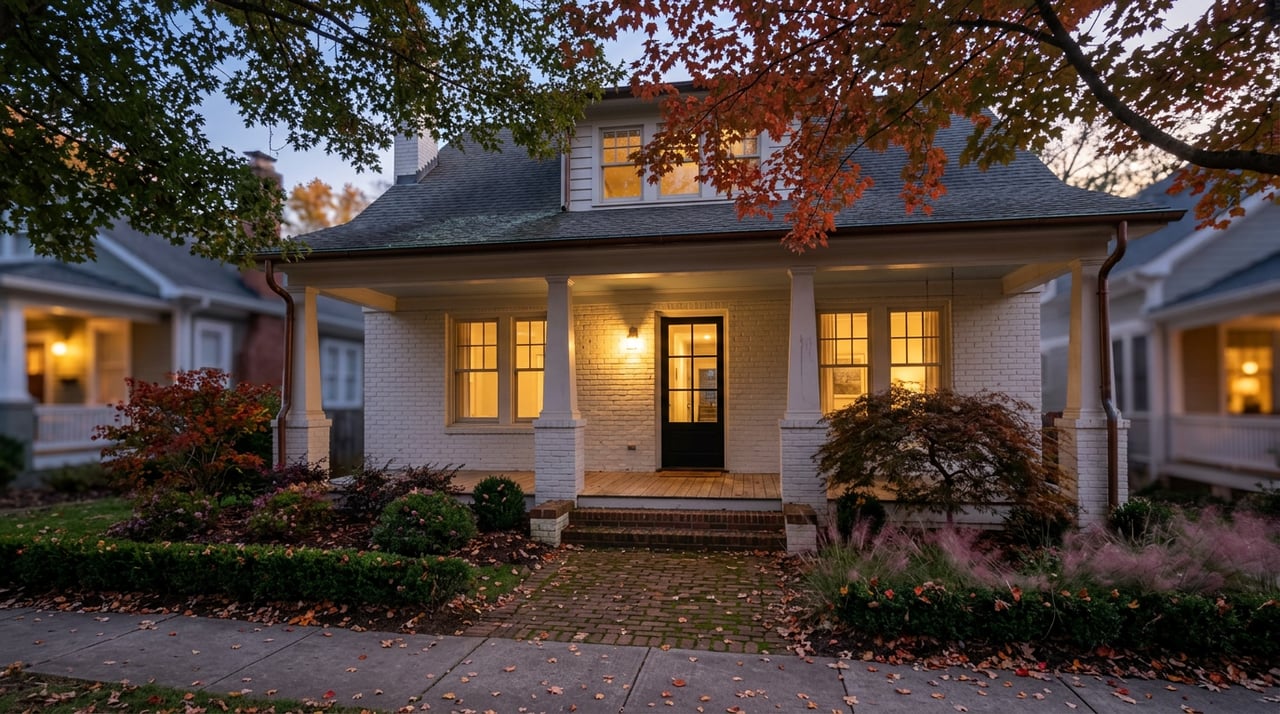
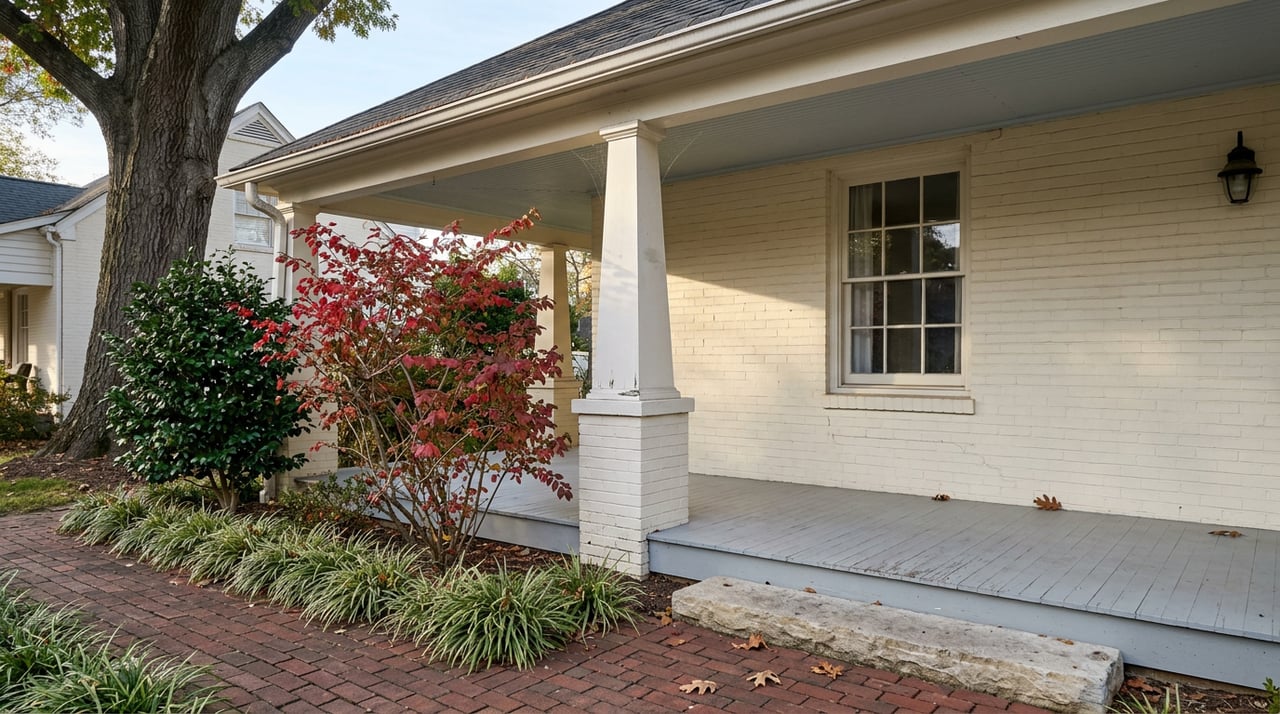
The homes that anchor Plaza Midwood's identity, the bungalows, Tudor Revivals, and the 1928 quadraplex duplexes along Thomas Avenue, fall squarely in that first row. Knob-and-tube wiring and undersized panels are common enough in Charlotte's early-1900s housing stock that GEICO tracks them as a known risk category, and the brittle insulation on wiring this old is exactly the kind of thing an inspector calls out by name, not by implication.
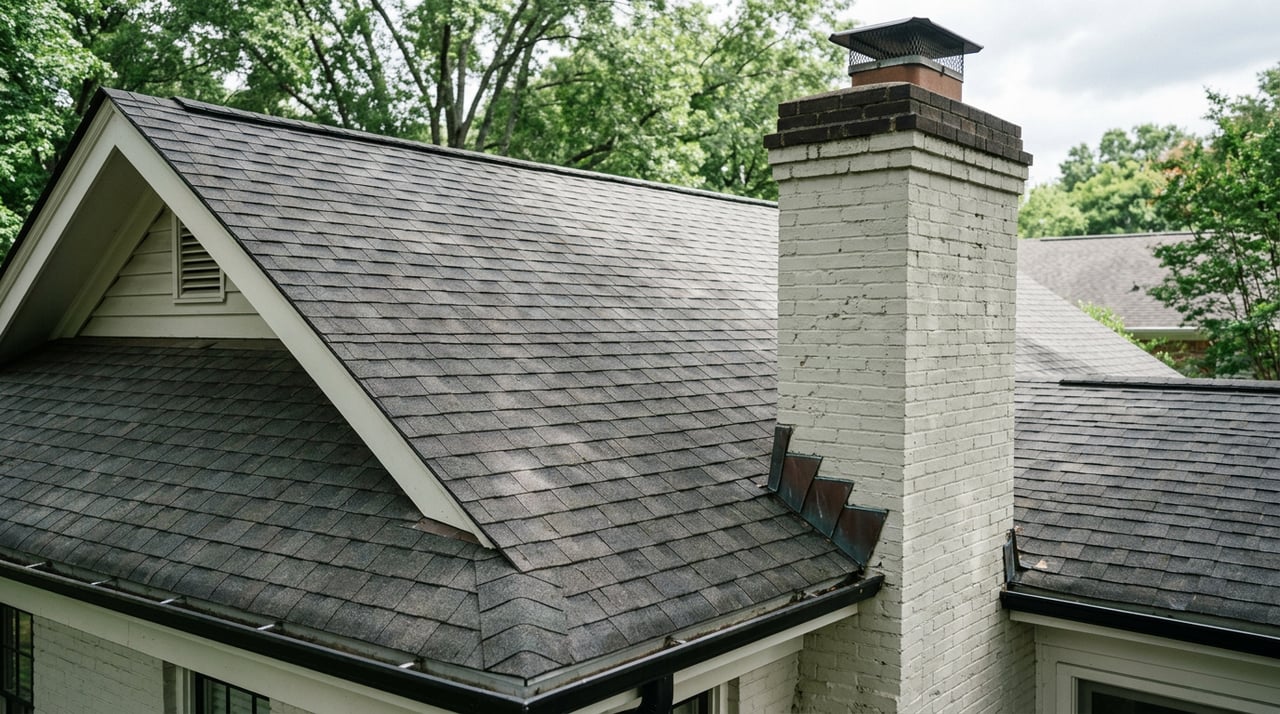
The roof tells a similar story. Plaza Midwood's mature, decades-old tree canopy is one of the neighborhood's defining features and one of its most consistent inspection liabilities. Local roofers who work the neighborhood regularly note algae and moss on shaded, north-facing slopes on nearly every roof more than seven years old, along with heavy oak debris buildup in valleys and premature wear on the copper or galvanized step flashing around brick chimneys, a detail specific to the bungalows and Tudors that make up so much of the neighborhood's original stock. Below ground, the same clay-heavy soil and mature root systems that give the streets their canopy also put older sewer lines at risk of cracks and root intrusion, a slower-moving problem that rarely announces itself until a camera inspection finds it.
As Adam Long, president of HomeTeam Inspection Service, put it when discussing foundation movement in older homes, inspectors often tell owners:
"They may tell you to just watch it to make sure it doesn't get bigger or expand."
That's a reasonable outcome for a hairline crack. It's a much harder conversation when the finding is active knob-and-tube wiring or a lender that won't touch a house with polybutylene pipe still in the walls.
It's worth being precise about what Plaza Midwood's local historic district actually governs, because it's easy to assume that living inside a protected area means someone has already looked at the bones of the house. Roughly 14 percent of the neighborhood sits within the Local Historic District, designated in 1992. Inside that boundary, exterior changes such as windows, doors, fencing, tree removal, and new construction require a Certificate of Appropriateness before work begins.
That review process protects the street-facing character of the neighborhood. It has nothing to do with what's behind the walls or under the foundation. A house can have a beautifully preserved porch and facade and still carry knob-and-tube wiring an insurer won't underwrite. The Certificate of Appropriateness process and the home inspection process are answering two completely different questions, and conflating them is how sellers end up surprised.
Plaza Midwood listings were spending a median of 65 days on the market as of August 2026, matching the same pace as a year earlier, with the median list price around $799,000. That's not a market where a seller can afford to lose momentum to a due diligence cancellation and simply relist without consequence. Every day back on market is a day buyers notice, and a listing that resets after a failed due diligence period tends to invite lower offers the second time around.
A pre-listing inspection changes who controls the timeline. Instead of a buyer's inspector discovering the knob-and-tube wiring or the root-intruded sewer line during a 14-to-30-day window where they can walk for a few thousand dollars, the seller finds it first, on their own schedule, with no clock running. From there, the choice is straightforward: fix the item before it ever reaches a buyer's report, or price it into the listing and disclose it plainly.
North Carolina law gives sellers less room to maneuver here than many assume. Under the state's Residential Property Disclosure Act, a seller cannot simply write "as is" across the disclosure form and treat that as a substitute for honest answers. A previously repaired roof leak or plumbing issue still has to be disclosed even after the repair is done. Selling a home in as-is condition doesn't remove the disclosure obligation. It only removes the promise to fix anything further. Sellers who get ahead of the inspection with their own report are also the ones best positioned to fill out that disclosure accurately, with documentation in hand instead of guesswork.
The negotiation itself tends to go smoother when a seller offers a credit rather than managing the repair directly. It keeps the seller's timeline intact and gives the buyer flexibility to choose their own contractor once the home is theirs. That only works, though, if the seller reaches the table with the finding already understood rather than discovering it for the first time alongside the buyer, with the due diligence clock already running against them.
Does living in the Local Historic District mean my home's systems have already been inspected? No. The Certificate of Appropriateness process reviews visible exterior changes like windows, doors, and new construction. It says nothing about wiring, plumbing, or roof underlayment.
If I sell as is, do I still have to disclose past repairs? Yes. North Carolina's disclosure law requires sellers to report known issues, including ones that have already been fixed, regardless of an as-is notation on the contract.
Is a pre-listing inspection required in North Carolina? No, but it shifts who discovers a defect first. For a home built before 1960, that timing advantage is often the difference between negotiating a credit calmly and losing a buyer during due diligence.
If you're weighing when to list a Plaza Midwood home and want a clear-eyed read on what your specific house, and its specific decade, is likely to show an inspector, Jessica Grier is glad to walk through it with you. Let's Connect.



Whether advising on an in-town estate, a new luxury build, or an investment opportunity, Jessica offers discretion, distinction, and results. Work with Jessica Today!